Insights from the Cambridge Disinformation Summit 2026:
“You have to leave now and stay away for one hour. Please, leave now. We’re turning this place into Hogwarts.”
This was the slightly hurried call from Alan Jagolinzer & team at the end of last Thursday’s sessions of the Cambridge Disinformation Summit, before everyone had to temporarily rush out of the fantastic hall that hosted the event.
The dinner that followed was not Hogwarts-themed, but it did have a famous guest…
Sir Sadiq Khan, the Mayor of London, proved to be very knowledgeable on what social media means for today’s society – including the incredibly harmful effects it has on the younger generation and how it’s used for unlawful political gain. I had the opportunity to meet the Mayor after his speech and I took the opportunity to suggest information literacy as a critical skill for today’s politicians – to the citizens’ benefit, of course. I can confirm he took it well enough (that’s not the reason why we both turned blue, actually 😊).
But neither the dinner nor Sir Sadiq Khan was the only highlight of the event.
Governor Spencer Cox of Utah, USA, delivered a very powerful and passionate keynote on the need to regulate social media following years of increasing societal division in the US. I had the pleasure of directly asking him about his views on the relationship between social platforms and news media and whether that should be somehow regulated. His answer will probably be available on the Summit’s youtube channel.
Another highlight was the keynote on “the effects of concentrated media ownership on democracy” by The Honourable Malcolm Turnbull, 29th Prime Minister of Australia (2015-2018) and former Minister of Communications of the country, who played a central role in Australia’s online safety legislation. I asked Mr Turnbull the same thing I then asked the Mayor of London – do politicians need better information literacy? I must admit his answer was spot on, as was the Mayor’s – also to be found on the summit’s youtube.
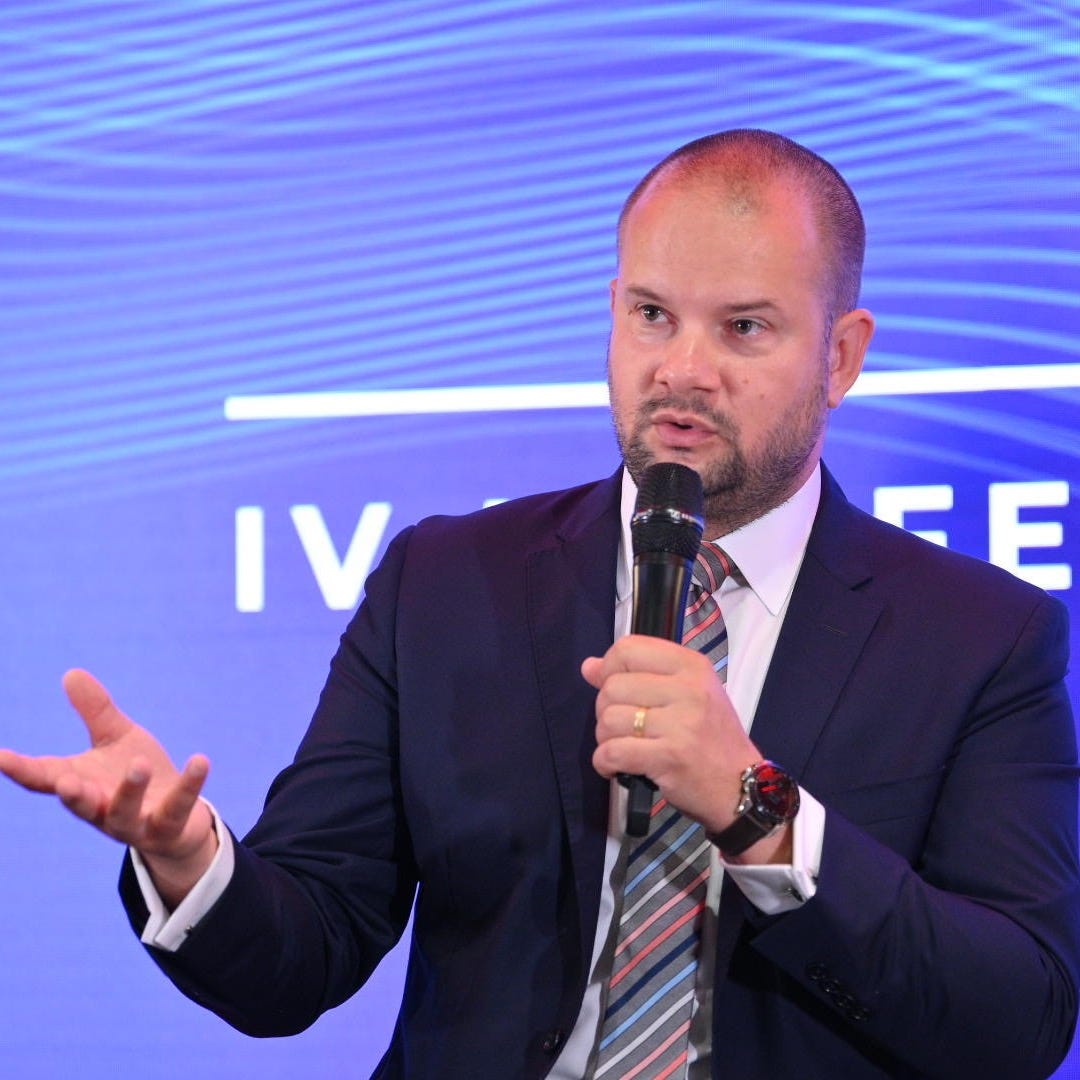
Last but not least, I was happy to be invited to take part in the Thomson Talks debate organised by the Thomson Foundation, on the sidelines of the Summit, called Effective Responses to Information Manipulation: Lessons from Fragile Contexts.
One of my personal conclusions following the summit is that there is no one-size-fits all solution to disinformation, and that, until legislation and education go seamlessly hand in hand, society will keep facing this existential threat.
It was great to represent EANA – The European Alliance of News Agencies at the Cambridge Disinformation Summit this year – I took this opportunity to showcase the importance of news agencies as fundamental pillars of the information ecosystem and key players in fighting disinformation worldwide.
University of Cambridge, Cambridge Judge Business School, Minderoo Centre for Technology and Democracy, The Psychometrics Centre – University of Cambridge.

Related Posts