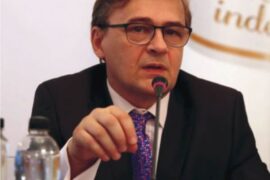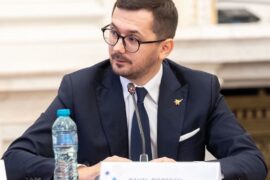
Delighted to have spent few illuminating days in this beginning of autumn at the Babeș-Bolyai University in the inter disciplinary Summer School dedicated to young scholars – ‘Against myopic memory: Youth and the politics of memory’, Cluj-Napoca, organised by Andrada Fatu-Tutoveanu – The Faculty of Letters in collaboration with The Faculty of Political, Administrative and Communication Sciences. Many thanks for the invitation!
I mostly appreciated the open environment for an interdisciplinary methodological and conceptual dialogue, deepening the young participants theoretical and practical understanding of memory at the intersection of Memory Studies, Film and visual Arts, History, Political Science, International Relations, Antropology and Literature.
In my lecture dedicated to Embodied Epistemology and how feminist anthropology impacted this methodological developments in recent years I tried to critically examine the intersection of memory with power, politics, history writing/revising and identity formation at the fragile intersection of individual and collective so-called somatic memories.
I was particularly emotional, because my presentation took place right one day after in Belgrade thousands of people have turned out to attend the funeral of the convicted war criminal Ratko Mladić, widely known as the Butcher of Bosnia, which the EU denounced as “glorification of a war criminal”.
As I watched the images on TV with the coffin taken en fanfarre from the Church of St. Luke the Apostle to the Topcider Cemetery, and saw thousands of war veterans and ultranationalist groups ranging from hooligans to biker gangs joining the procession – I feld that a discussion about trauma transmission in our region is a very difficult and most neccessary topic.
The vivid debates provoked by the event and the young researchers insights (including students from the Balkans) on the need to problematize the manipulations of collective emptions for political agendas left me more hopeful than I was before.

Related Posts